How Much Do Property Managers Charge in Durham, NC? A 2026 Fee Breakdown for Rental Owners
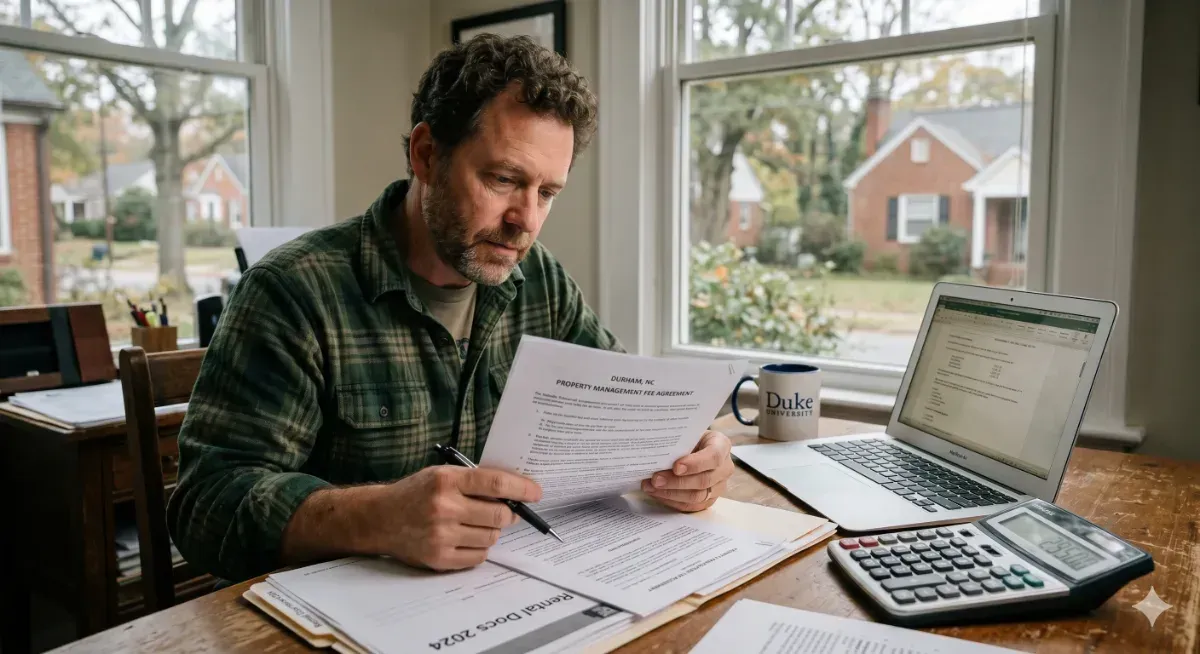
This article explains typical property management pricing in the Durham, NC market as of July 2026. Exact fees vary by company, property type, and the level of service you choose. Use these ranges as a benchmark when comparing quotes, not as a fixed price list.
If you own a rental home in Durham, one of the first questions you'll ask is simple: what does it actually cost to hand the day-to-day work to a professional? The answer is rarely a single number. Property management pricing is built from several layered fees, and two companies quoting "10%" can deliver very different value depending on what's bundled in. This breakdown walks Triangle rental owners through every common fee, what's typically included, and how to compare offers like an investor.
The headline number: the monthly management fee
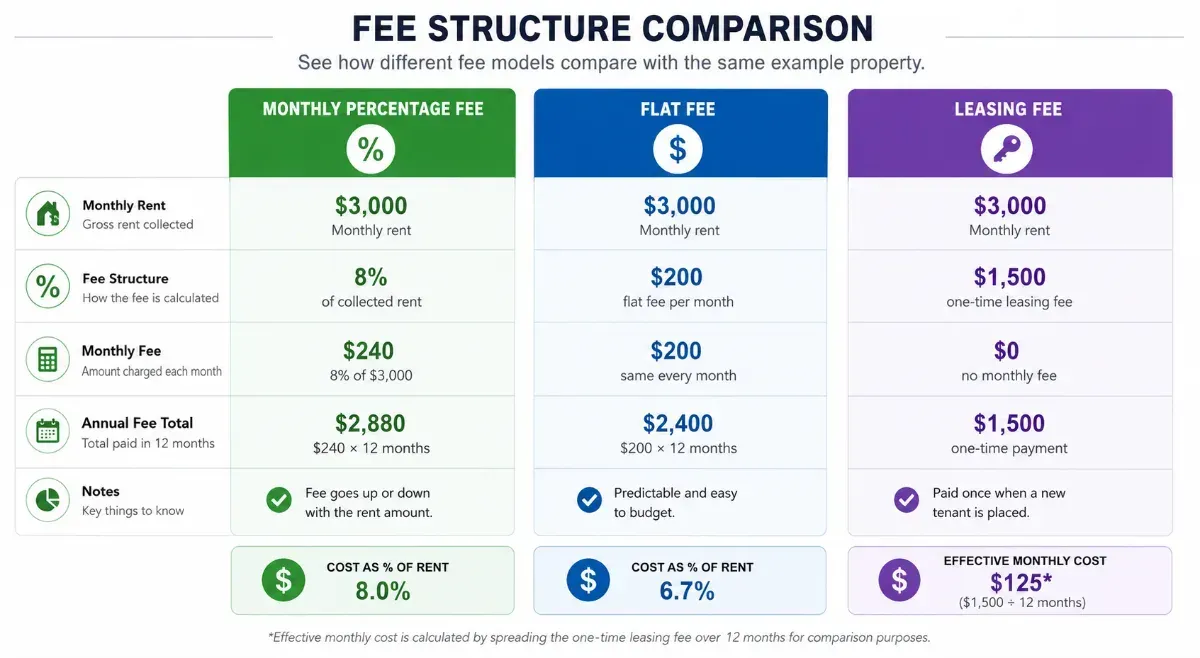
The monthly management fee is the recurring charge you'll see most often. In Durham and across the Raleigh-Durham-Chapel Hill Triangle, full-service managers typically charge 8% to 12% of collected rent, with 10% being a common midpoint.
On a home renting for $1,800 a month at 10%, that's roughly $180 per month, or about $2,160 a year. The fee usually covers rent collection, owner and tenant communication, maintenance coordination, accounting, and routine compliance with North Carolina landlord-tenant rules.
Percentage fees rise with rent; flat fees stay the same. If your home rents at the higher end of the market, a flat monthly fee can sometimes be cheaper, but percentage pricing keeps your manager motivated to keep the unit occupied and the rent flowing.
The leasing (tenant-placement) fee
The second big number is the leasing fee, also called a tenant-placement or new-lease fee. This one-time charge covers advertising the home, showing it, screening applicants, and preparing the lease. In the Triangle, leasing fees commonly run 50% to 100% of one month's rent.
Because this fee is triggered each time a new tenant is placed, tenant retention matters to your bottom line. A manager who keeps good residents in place for years saves you repeat leasing fees, which is one reason screening quality is worth paying attention to.
Lease-renewal fees
When a current tenant renews, many companies charge a smaller lease-renewal fee, often a few hundred dollars or a small fraction of one month's rent. It covers re-papering the lease, adjusting rent to market, and re-confirming terms. Renewal fees are almost always lower than a fresh leasing fee, which is exactly why retention saves you money.
Vacancy and "minimum" fees
Ask specifically how vacancies are billed. Under many percentage agreements, the monthly fee is charged only on rent actually collected, so an empty unit costs you little in management fees, though you're still carrying the mortgage and utilities. Other contracts use a reduced or minimum monthly fee during vacancies. Neither is automatically "bad," but you want to know before you sign.
Maintenance coordination and markups
Routine repairs are part of owning a rental. A property manager coordinates vendors, handles after-hours emergencies, and keeps your property in rentable condition. Some companies pass through vendor invoices at cost; others add a maintenance markup, a percentage on top of the repair bill. Neither approach is unusual, but the markup should be disclosed clearly.
Two areas cause the most owner surprises: maintenance markups and a "maintenance reserve" the company holds from your account. Both are common and reasonable, but only when they're spelled out in plain language in the agreement.
Other fees to ask about
Depending on the company and your property, you may also encounter:
- Setup or onboarding fee to bring your property into their system
- Advertising or marketing fee above the leasing fee, less common with full-service firms
- Inspection fees for periodic interior/exterior checks
- Eviction coordination fee if a tenancy has to be terminated
- Early-termination or cancellation fee if you leave the contract
None of these are red flags on their own. What matters is whether they appear on a clear, itemized fee schedule you can review up front. For more on vetting a company, see our guide on the questions to ask a property management company.
What you're actually paying for
It's tempting to shop on price alone, but the cheapest percentage isn't always the best deal. A strong manager earns the fee by protecting you from the expensive problems: extended vacancies, unqualified tenants, deferred maintenance, and North Carolina compliance missteps. Thorough applicant screening can save you far more than the fee difference between two companies, which is why it's worth reviewing how we screen and qualify applicants before you choose a manager.
When you compare Durham management quotes, line them up feature by feature:
- Monthly fee, and whether it's charged on collected vs. scheduled rent
- Leasing fee and renewal fee
- How vacancies are billed
- Maintenance handling and any markup
- Inspections, reporting, and owner portal access
- What happens if you want to cancel
Do you even need a property manager?
If you live near the property, own a single unit, and enjoy handling tenants and repairs, self-managing can work. But many Durham owners hit a tipping point: an out-of-state move, a second property, a problem tenant, or simply running out of nights and weekends. At that point, a 10% fee that buys back your time and reduces risk often pays for itself.
If you're still deciding whether to keep the home as a rental at all, it's worth running the numbers both ways. Our team can also help you weigh renting vs. selling your Durham home based on current market conditions. For a renter-side view of that same decision, see our companion guide on renting vs. buying in the Triangle.
Fee ranges here are consistent with national and statewide benchmarks such as iPropertyManagement: average property management fees. For the rules governing North Carolina rentals, see the NC General Statutes Chapter 42 Landlord and Tenant.
Apple Realty manages homes across Durham and the Triangle with transparent, fee-schedule pricing and rigorous tenant screening. Explore our Durham property management services , visit the rental owner resources page, or read our owner FAQs to see exactly what's included.
Frequently Asked Questions
How much do property managers charge in Durham, NC?
Most full-service property managers in the Durham and wider Triangle market charge a monthly management fee of roughly 8%-12% of collected rent, plus a one-time leasing tenant-placement fee of about 50%-100% of one month's rent when they fill a vacancy. On a home renting for $1,800/month at 10%, that's about $180/month in management fees.
Is property management worth the cost?
For many owners, yes. A manager handling marketing, tenant screening, rent collection, maintenance coordination, and North Carolina compliance can reduce vacancy, late payments, and costly legal mistakes. The math usually works best for owners who don't live nearby, own multiple units, or simply don't want to be on call for repairs.
What's the difference between a percentage fee and a flat fee?
A percentage fee, for example 10% of rent, scales with the rent you collect, so a higher-rent home costs more to manage. A flat fee charges the same dollar amount each month regardless of rent. Flat fees can favor higher-rent properties, while percentage fees keep the manager's incentive tied to keeping the unit rented and rent collected.
Do I pay a property manager when the unit is vacant?
It depends on the contract. Many percentage-based agreements only charge the monthly fee on rent actually collected, so you pay little or nothing during a vacancy. Others charge a reduced or minimum fee. Always confirm how vacancy is handled before signing.
What fees should I watch out for in a management agreement?
Beyond the monthly and leasing fees, ask about lease-renewal fees, marketing/advertising charges, maintenance markups, inspection fees, eviction-handling fees, and any setup or cancellation fees. A clear, itemized fee schedule is a good sign you're dealing with a transparent company.