Lease Renewals in Raleigh: What to Decide Before Your Tenant's Lease Rolls Into a New Year (2026)

Why Fourth Quarter Is Renewal Season in the Triangle
If you own rental property in Raleigh or Durham, there is a good chance your lease renewal decision is landing right now. A large share of Triangle-area 12-month leases get signed in the winter, when new residents are relocating for jobs at Research Triangle Park, Duke, NC State, UNC, or one of the area's fast-growing tech and biotech employers. Those leases roll into their renewal window the following October, November, and December, which means Q4 functions as a mini renewal season for a huge slice of the local rental stock.
That timing matters because the decisions you make now set your cash flow for the next 12 months. A late or poorly handled renewal can mean a surprise vacancy heading into the slower winter leasing months, when it typically takes longer to re-rent a home and you have less leverage to hold your asking price. Getting ahead of the calendar is the single easiest way to protect your rental income through the new year.
Raleigh and Durham's winter leasing market moves slower than spring and summer. A vacancy that opens in December or January often sits longer and may need a small price concession to fill quickly. Deciding on a lease renewal 60 to 90 days out avoids that trap entirely.
When to Renew a Lease: A Realistic Timeline
Knowing when to renew a lease is mostly about working backward from the expiration date. A timeline that works well for most owners in Raleigh property management looks like this:
- 90 days out: Pull comparable rents for the neighborhood, review the tenant's payment and maintenance history, and decide whether you want to offer a renewal at all.
- 60 to 75 days out: Send the lease renewal letter with a proposed rent and a response deadline.
- 45 days out: Follow up if you have not heard back. This is also the point where, if the tenant has declined, you should start preparing marketing photos and a listing so the home does not sit vacant.
- 30 days out: Have a signed renewal or a confirmed move-out date in hand. If neither exists and the lease is about to expire, address the month-to-month fallback directly rather than letting it happen by accident.
Owners who wait until the final two or three weeks of a lease term tend to end up reacting instead of planning, which almost always costs money in the form of either a vacancy gap or an under-market rent locked in out of urgency.
Deciding Whether to Offer a Renewal at All
Not every lease should be renewed, and a renewal offer is not an entitlement. Before sending anything to the tenant, it is worth reviewing:
- Payment history. Has rent consistently arrived on time, or has the account required repeated late notices?
- Property condition. Walk-throughs or recent maintenance tickets often reveal whether the tenant is caring for the home.
- Lease compliance. Unauthorized occupants, pets, or repeated noise or HOA complaints are all relevant.
- Market direction. If rents in the submarket have moved meaningfully since the last lease was signed, that should inform both the renewal decision and the number you propose.
A tenant with a clean record and a fair rent increase is usually the lowest-risk, lowest-cost path to another 12 months of stable income. Turnover is expensive once you account for marketing, vacancy days, cleaning, and make-ready repairs, so a renewal should be the default plan unless there is a specific reason to move on. For a broader overview of landlord and tenant obligations in North Carolina, the NC Justice Center's consumer guide to landlord-tenant law is a useful plain-language reference.
Rent Increase Strategy at Renewal
North Carolina places no statewide cap on how much a landlord can raise rent between lease terms, so the number comes down to market data and retention strategy rather than a legal ceiling. That said, a few principles keep the decision grounded:
- Anchor to comparable rents, not just last year's number plus a flat percentage. Pull three to five similar listings currently active in the same zip code or school district.
- Price in known cost increases, including any change in property taxes, insurance premiums, or HOA dues, which have both risen notably across Wake and Durham counties in recent years.
- Weigh retention against turnover cost. A modest increase that keeps a reliable tenant in place is often more profitable than a larger increase that pushes them out and leaves the unit vacant for even a few weeks.
- Put the new number in writing, along with the effective date, inside the renewal letter itself. Verbal agreements about rent create disputes later.
If your proposed increase would make the unit rent for noticeably more than comparable homes nearby, expect pushback or a non-renewal. If it still sits at or below market after the increase, you are very likely to get a signed renewal without much friction.
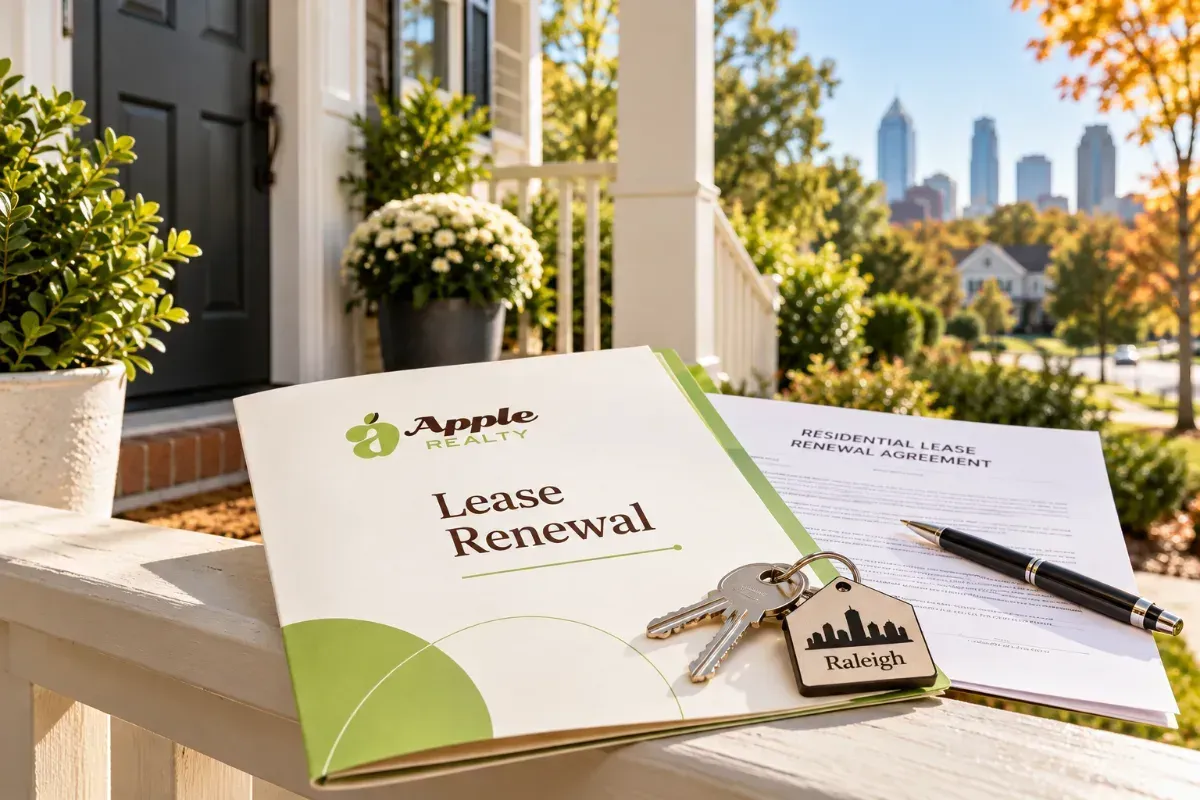
Writing a Lease Renewal Letter That Actually Gets Signed
A lease renewal letter does not need to be complicated, but it does need to be complete. At minimum, include:
- The current lease's expiration date.
- The proposed new lease term (another 12 months, 6 months, or month-to-month) and its start date.
- The new rent amount, and whether any fees, pet terms, or other provisions are changing.
- A clear deadline for the tenant to respond, typically two to three weeks after the letter is sent.
- Simple instructions for how to accept, whether that is an e-signature link, a tenant portal, or a printed copy to sign and return.
Keep the tone businesslike and friendly rather than transactional. Tenants who feel like a number are more likely to shop around; tenants who are treated like a valued resident, even in a short letter, are more likely to sign and stay. Always send the letter through a channel you can document, such as email or a property management portal, so there is a timestamped record of delivery if a dispute ever arises.
Month-to-Month vs. Lease Renewal: Weighing the Fallback
When a tenant cannot commit to a new fixed term, right away, the fallback option is usually month-to-month. It is important to understand what that actually means in North Carolina before offering it.
The legal reality: absent a different agreement, a month-to-month tenancy can be ended by either the landlord or the tenant with just 7 days' written notice. This is laid out in NC General Statute 42-14 on tenancy termination notice, and it is far shorter than the 30-day notice many owners assume applies. It also cuts both ways: a tenant can give you only 7 days' notice before vacating.
When month-to-month makes sense:
- You are planning to sell the property within the next several months.
- You need a short bridge while a major renovation or a family member's move-in is being finalized.
- The tenant has a short-term reason for needing flexibility, such as a pending job relocation, and is otherwise a strong tenant you want to keep for now.
When a new fixed-term lease is the better call:
- You want predictable income and do not want to re-market the unit on short notice.
- The local rental market is stable to rising, and locking in 12 months protects against a slower stretch.
- The tenant is reliable and simply needs the renewal process nudged along.
Many owners charge a modest month-to-month premium, often $100 to $200 above the equivalent 12-month rate, to compensate for the added turnover risk and shorter notice period. That premium should be disclosed clearly in the renewal paperwork, not added quietly.
If a lease expires and the tenant simply keeps paying rent with no new agreement signed, you may end up in a month-to-month tenancy you never intended, on terms you never reviewed. Address renewal, non-renewal, or an explicit month-to-month agreement in writing before the original lease term ends.
What a Holdover Tenancy Means for You
A "holdover" is simply a tenant who remains in the property after the lease term ends. In most cases, if the landlord accepts rent after the expiration date without a new signed lease, North Carolina treats the arrangement as having converted into a periodic tenancy, typically month-to-month, with the same 7-day notice rule described above. If the landlord does not want the tenancy to continue on any terms, accepting rent after the lease ends can undercut that position, so owners who intend to require a move-out should be careful about collecting any additional rent before the matter is resolved.
This is one more reason renewal decisions are best handled proactively rather than reactively. A documented decision, whether that is a signed renewal, a signed month-to-month addendum, or a clear non-renewal notice, protects both sides and avoids ambiguity about what happens next. If you have general questions about licensing or property management practice standards in North Carolina, the NC Real Estate Commission FAQs are a reliable starting point.
How Apple Realty Handles Renewals for Owners
For owner-clients working with Apple Realty's property management team, the renewal process is built around the timeline above: a market rent review well before the expiration date, a renewal letter sent with enough lead time to get a real decision, and documentation at every step so there is never a question about what was offered or accepted. The same process applies whether a property sits in Raleigh property management or falls under our Durham property management coverage, because the underlying North Carolina landlord-tenant rules are the same across both markets.
This article is provided for general informational purposes only and does not constitute legal advice. North Carolina landlord-tenant law and local practices can change, and individual lease terms vary. Property owners should consult a licensed North Carolina real estate attorney or a qualified property manager before making lease renewal or notice decisions. Statutory references in this article are current as of October 2026.
Apple Realty manages the entire lease renewal process for owners across Raleigh and Durham, from market rent analysis to tenant communication to signed paperwork. Reach out to our property management team to see how we keep your renewals on schedule and your rent at market.
Frequently Asked Questions
When should I start the lease renewal conversation with my tenant?
In the Triangle, most property managers start the conversation 60 to 90 days before the lease end date. This gives the owner time to decide on a rent adjustment, gives the tenant time to plan a move if they decline, and leaves enough runway to re-list the home during a reasonable season if the tenant does not renew. Waiting until the last two or three weeks puts you in a weak negotiating position and often forces a rushed month-to-month arrangement by default.
How much can I legally raise rent at lease renewal in North Carolina?
North Carolina does not have statewide rent control, so there is no legal cap on how much you can raise rent at renewal, as long as the increase is not used to illegally discriminate or retaliate against a tenant for a protected activity like reporting a code violation. The practical limit is the local market. In most Raleigh and Durham submarkets, a 3 percent to 7 percent annual increase keeps a good tenant while still tracking rising operating costs, but comparable rents should always be checked before setting the number.
Do I have to give my tenant written notice that their lease will not be renewed?
If the lease is for a fixed term, such as 12 months, North Carolina law generally does not require advance notice of non-renewal because the agreement simply ends on its stated date. However, most well-drafted leases include their own notice requirement, often 30 or 60 days, and many owners choose to give written notice as a courtesy and to avoid an accidental holdover tenancy. Always check the lease's own renewal and notice clause first, since it can create an obligation that state law does not.
What happens if the lease ends and neither side does anything?
If a tenant stays in the home past the lease end date and the landlord continues to accept rent without a new signed agreement, the tenancy typically converts into a periodic tenancy, most often month-to-month, under North Carolina law. That arrangement can be ended by either party with 7 days' written notice under NC General Statute 42-14, which is far shorter than most owners expect and is one of the biggest reasons to resolve renewal decisions before the lease rolls over.
Should I offer a month-to-month option instead of a new fixed-term lease?
A month-to-month arrangement gives an owner flexibility, which matters if you are considering a sale or a major renovation in the near term, but it comes at the cost of stability and often a higher monthly rent to offset the added turnover risk. For most buy-and-hold owners in Raleigh and Durham, a new 12-month lease is the stronger financial choice, with month-to-month reserved as a short-term bridge rather than a long-term strategy.
What should a lease renewal letter include?
A lease renewal letter should state the current lease's expiration date, the proposed new term and start date, the new rent amount and any change in fees or terms, a clear deadline for the tenant to respond, and instructions for signing. It should be sent well before the response deadline you are asking for, and a copy should be kept in the tenant file along with proof of delivery, whether that is email, a tenant portal message, or certified mail.